Lake Muskoka is the largest and most prestigious body of water in Ontario's renowned "Cottage Country," located approximately 200 km (125 miles) north of Toronto in South-Central Ontario. Spanning 120 km² with over 285 km of heavily indented shoreline and more than 400 islands, this lake serves as the heart of the Muskoka District and anchors the famous "Big Three" lakes alongside Lake Rosseau and Lake Joseph.
Carved from billion-year-old Precambrian granite and gneiss of the Canadian Shield, the lake's dramatic geography features deep basins reaching 67 meters, rugged rock formations, and crystal-clear waters. The Muskoka River feeds the lake from the east through Bracebridge, while Bala Falls drains it westward into the Moon River and eventually Georgian Bay. The unique lock system at Port Carling creates an extensive inland water highway connecting all three major lakes, allowing boats to navigate over 100 km of waterways.
The shoreline blends towering Eastern White Pines, hemlock, and balsam fir with deciduous maples and birch, creating spectacular autumn colors. This transition-zone ecosystem sits on exposed Canadian Shield bedrock visible throughout the landscape as smooth "whaleback" shoals and jagged cliffs—a glacially-sculpted terrain that defines Muskoka's distinctive aesthetic.
The Lake Muskoka real estate market has undergone significant recalibration in 2026, transitioning from the frantic seller's market of the early 2020s to a balanced environment favoring buyers. Median waterfront prices corrected approximately 20% year-over-year through late 2025, settling around $1.02M–$1.1M—a healthy market adjustment rather than a crash. Properties now average 34–46 days on market, with buyers successfully negotiating 5–6% off list prices.
Current pricing tiers reflect location and property quality: Port Carling commands $2.5M–$5M for standard waterfront cottages and $8M–$20M+ for luxury estates; Bala and Torrance range from $1.8M–$3.5M for waterfront properties and $5M–$12M for high-end estates; while Gravenhurst and Bracebridge offer entry points at $1.5M–$3M for waterfront and $4M–$10M for luxury properties. Island properties present value opportunities at $1.2M–$2M due to water-access-only logistics.
Market seasonality remains predictable: spring (April–June) brings peak inventory and competition as buyers aim for summer closings; summer (July–August) sees activity slow while owners use their properties; fall (September–October) creates a secondary buying window as motivated sellers avoid winter carrying costs; and winter (November–March) offers the best opportunities for value hunters seeking year-round homes or land-value plays.
The rental market remains exceptionally strong, with high-season properties generating $7,700–$9,300 monthly and ultra-luxury estates commanding $10,000+ per week. However, Township of Muskoka Lakes STR regulations now require many properties to maintain 30-night minimum stays, with approximately 69% of district listings pivoting toward monthly tenants. Analysts project modest 2–3% appreciation for 2026, positioning Lake Muskoka as a "buy and hold" legacy asset rather than a flip market.
Lake Muskoka properties range from historic "Olde Muskoka" cottages to contemporary glass-and-steel estates, with waterfront footage often mattering more than acreage. Modern zoning requires minimum 200-foot frontage and 1-acre lots for new creation, while the "Big Three" lakes mandate 300-foot frontage for the highly coveted two-storey boathouse with living quarters—a feature that significantly boosts resale value.
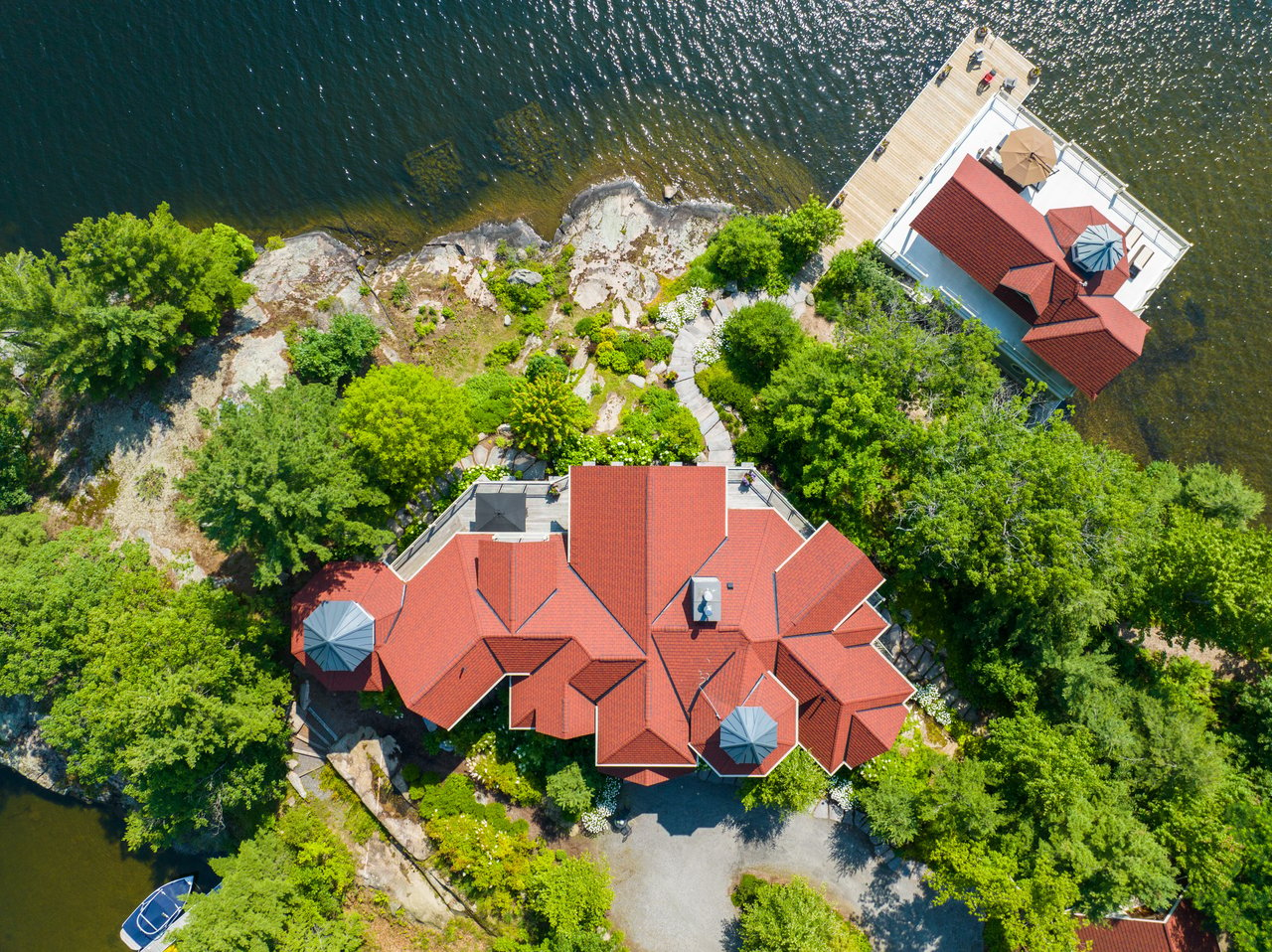
Waterfront Estates represent the market pinnacle: multi-structure compounds featuring main lodges, guest cottages (bunkies), and iconic Muskoka boathouses. These properties showcase professional landscaping, deep-water docking, and premium west-facing "sunset exposure." Many include the critical Shore Road Allowance (SRA) purchase—the 66-foot municipal strip between lot and water—ensuring ownership right to the water's edge for dock and boathouse construction.
Classic Cottages & Seasonal Properties are traditional mid-20th-century wood-frame structures, often listed as "seasonal" due to lack of winterized water lines or adequate insulation. Many buyers acquire these as land-value plays for teardown and rebuild, capitalizing on established frontage rights and grandfathered setbacks.
Year-Round Homes feature full winterization with forced-air heating, drilled wells, and maintained road access. These increasingly common properties serve the growing population of permanent lake residents who work remotely or have relocated from the GTA.
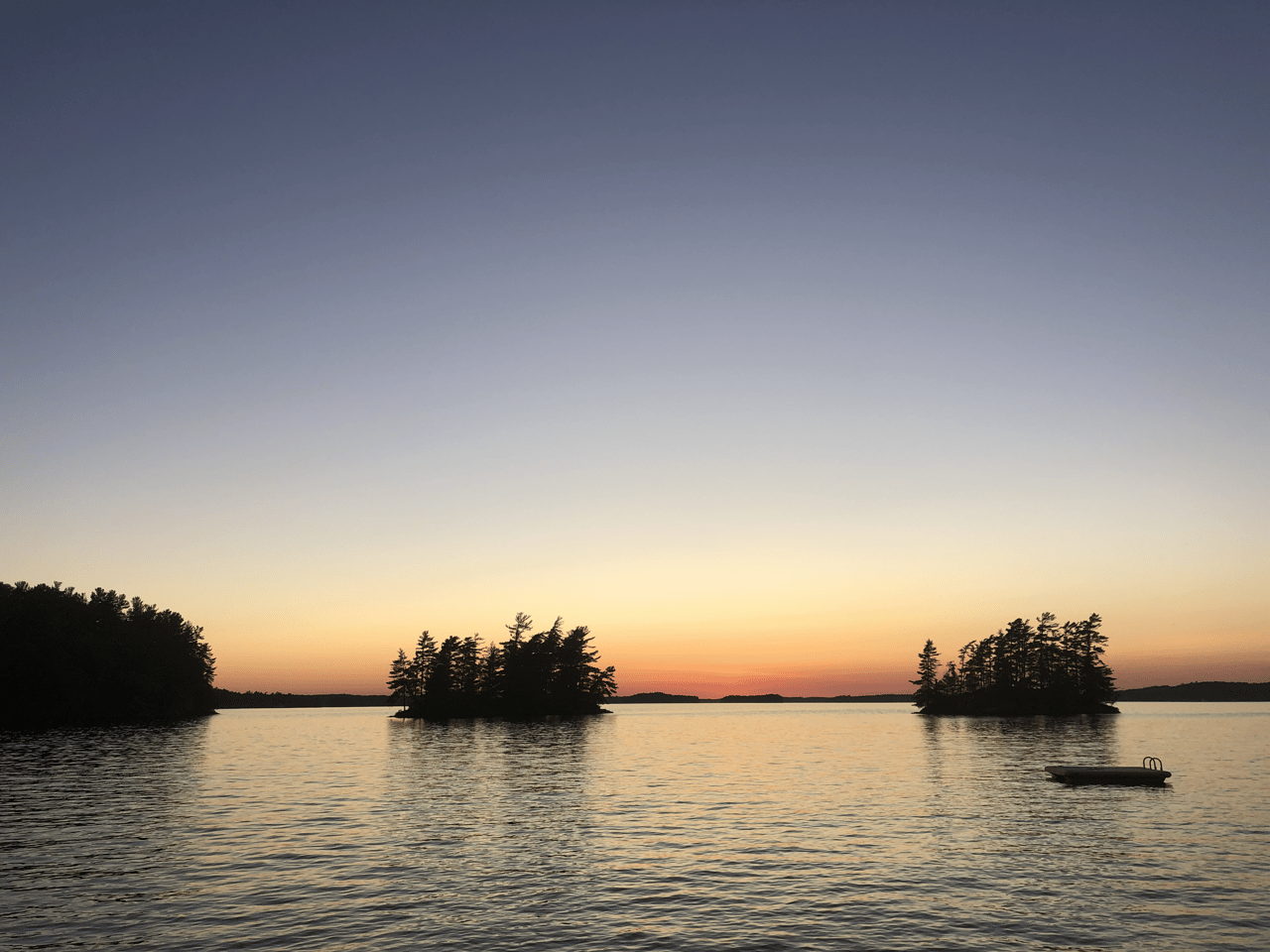
Island Properties span Lake Muskoka's 400+ islands, offering relative affordability compared to mainland estates but requiring private boat access for all activities including groceries and waste removal. These properties appeal to buyers seeking maximum privacy and willing to embrace water-access-only logistics year-round.
The Canadian Shield geology creates hazardous underwater shoals requiring careful navigation, but also provides the dramatic rock formations and deep-water anchorages that define premium Muskoka properties. Buyers must verify septic capacity, water intake systems, and frontage depth—all critical factors in property value and development potential.
Lake life revolves around boating, with vintage wooden "Dispros" (Disappearing Propeller boats) and modern wake boats filling marinas from May through October. Key hubs include Muskoka Wharf in Gravenhurst (home to RMS Segwun and Wenonah II steamships), Walkers Point Marina for high-end sales and rentals, Allport Marina near Bracebridge's river mouth, and historic Beaumaris Marina serving the Big Three lakes system.
Public beaches provide family-friendly access: Kirby's Beach in Bracebridge offers long sandy shoreline and shallow entry; Muskoka Beach Park in Gravenhurst delivers classic beach atmosphere; Hanna Park in Port Carling provides quick dips for shoppers; and Jaspen Park in Bala features playground facilities along the Moon River.
The diverse fishery supports Walleye, Smallmouth and Largemouth Bass, Northern Pike, and Lake Trout. Deep waters near Browning Island attract trout anglers, while weedy bays host bass and pike. The lake's irregular shape creates countless fishing hot spots accessible by boat.
Golf enthusiasts enjoy world-class courses carved through granite outcroppings: Muskoka Bay Resort's Doug Carrick design ranks Top 10 in Canada; The Rock Golf Club features Nick Faldo's signature tight fairways and rock walls; Taboo Muskoka offers challenging championship play; and Windermere Golf & Country Club provides traditional historic atmosphere.
Winter transforms the landscape without diminishing activity. OFSC District 7 maintains extensive snowmobile trails connecting towns. Hidden Valley Highlands near Huntsville provides downhill skiing. Ice fishing thrives in sheltered bays for Walleye and Perch. Arrowhead Provincial Park's world-famous Ice Trail attracts skaters, while many locals maintain private lake rinks.
Hiking options include Torrance Barrens Dark-Sky Preserve's 14 km of moonscape-like granite trails with world-class stargazing, Hardy Lake Provincial Park's rugged 8 km loop with Shield views, and Gravenhurst's forested Hahne Farm Trail for easier terrain.
Full-service groceries operate in Bracebridge (Independent Grocer/Drenth's, Sobeys, Walmart Supercentre) and Gravenhurst (Sobeys, Independent Grocer). Specialty markets include boat-accessible Silver Stream Farms in Port Sandfield for premium produce and Field of Greens in Port Carling for gourmet prepared meals. Bracebridge provides comprehensive retail including Home Depot and Canadian Tire, while Port Carling serves as the "Beverly Hills of the North" for high-end fashion and décor.
Dining ranges from dockside casual to fine dining: The Boathouse at Taboo Resort and Waters Edge at Lake Joseph Club anchor waterfront dining; Crossroads in Rosseau offers the region's finest cuisine; The Oar in Gravenhurst provides year-round gastropub sophistication; Pizza Station in Bala delivers legendary casual post-concert slices.
Education is served by Trillium Lakelands District School Board and Simcoe Muskoka Catholic District School Board. Top-rated schools include Macaulay Public School in Bracebridge and Glen Orchard Public School in Port Carling for elementary; Bracebridge and Muskoka Lakes Secondary School (BMLSS) and Gravenhurst High School for secondary; and Georgian College's Bracebridge campus for post-secondary programs.
Healthcare centers on the $1 billion Muskoka Algonquin Healthcare modernization, with South Muskoka Memorial Hospital in Bracebridge providing 24/7 emergency and acute care. Cottage Country Family Health Team operates clinics in Gravenhurst, Bracebridge, and Port Carling, with advanced trauma cases transferred to Royal Victoria Regional Health Centre in Barrie.
Financial services include full RBC, TD, Scotiabank, CIBC, and BMO branches in Bracebridge and Gravenhurst, with smaller TD presence in Port Carling. The region supports specialized waterfront trades including boathouse builders, septic experts, marine mechanics, and waterfront-specialist lawyers concentrated in Bracebridge and Port Carling.
Connectivity has dramatically improved with high-speed fiber through Lakeland Networks in town cores, Starlink satellite delivering 100–300 Mbps to remote islands, and 5G fixed wireless from Bell and Xplore. This infrastructure enables reliable "work from cottage" arrangements year-round.
Lake Muskoka sits 170–190 km north of downtown Toronto, typically requiring 2–2.5 hours via Highway 400 to Highway 11. Friday summer afternoons can extend drives to 3.5+ hours through Barrie bottlenecks; savvy locals depart before 2 PM or after 8 PM. The route transitions from GTA sprawl through multi-lane 400 to the rock-lined Shield roads of Highway 11, splitting left toward Orillia/North Bay. Secondary Highways 169 and 118 branch to Bala, Torrance, and Port Carling.
Muskoka Airport (CYQA) between Gravenhurst and Bracebridge handles private jets and charters, with seasonal Porter and FLYGTA air taxi service offering 35-minute flights from downtown Toronto. Most international visitors use Toronto Pearson (YYZ) 90 minutes south, renting cars or booking Hammond Transportation shuttles. Billy Bishop (YTZ) downtown serves boutique airlines flying directly into Muskoka Airport.
Local navigation splits between wheels and propellers. East-side properties near Highway 11 enjoy municipally maintained paved roads, while west-side and deep-point cottages access via private unpaved roads possibly unplowed in winter. Island properties require boat slips at local marinas as "driveways."
Water navigation spans the three-lake system: boats travel from Gravenhurst through Port Carling Locks into Lake Rosseau, then through Port Sandfield swing bridge into Lake Joseph—over 100 km of connected waterways. GPS or hydrographic charts are mandatory due to notorious "floating islands" and granite shoals lurking 6 inches below surface.
Year-round versus seasonal living presents distinct experiences. Seasonal residents embrace the 10-week July–August tradition of water-focused activities and social circuits, bookended by cottage "opening" (spring water line activation) and "closing" (fall draining and shuttering). Year-round residents navigate winter isolation with treacherous roads and common power outages, April's difficult "mud season" with black flies and load-restricted soft roads, and continuous maintenance requiring backup generators, efficient HVAC, and professional snow removal for long driveways.
The 2026 social calendar anchors community life: Fire and Ice Festival (late January, Bracebridge) brings winter carnival street tubing and fireworks; Venture Fest (June, Muskoka Brewery) offers craft beer and music; Muskoka Arts Summer Show (July, Bracebridge) hosts 200+ artisans; Muskoka Chautauqua (August, Windermere) provides 10 days of music and literary events; Bala Cranberry Festival (October) ranks among Ontario's largest fall celebrations.
The region honors its Indigenous roots—Chief Mesqua Ukie's Ojibwe legacy and traditional Anishinaabe hunting grounds—with strong Wahta Mohawks and Moose Deer Point First Nation presence today. The steamship era beginning in the late 1800s transformed Muskoka from failed farming settlement to Victorian tourism destination, creating the "Old Muskoka" aesthetic of preservation: Muskoka Chairs, mahogany Dispro boats, and shingle-style architecture emphasizing views over structures.
Modern utilities have closed the digital divide: fiber internet through Lakeland Networks in town cores, Starlink satellite providing 100–300 Mbps to remote islands, and 5G fixed wireless covering line-of-sight areas. Hydro One electricity costs exceed urban rates with different seasonal account fees. Most properties use septic systems requiring periodic inspections, lake-drawn water via heated intake and UV filtration, and transfer station waste management without curbside pickup.
Lake Muskoka represents Ontario's premier legacy waterfront asset—the authentic "blue chip" of cottage country that families protect across generations. The combination of Toronto proximity (2 hours), Canadian Shield grandeur, and Big Three lakes prestige creates irreplaceable scarcity that transcends market cycles.
The landscape itself commands devotion: billion-year-old granite meeting crystal waters, 400+ islands offering exploration, deep basins hiding trophy fish, and autumn colors igniting hillsides of mixed forest. This isn't manufactured beauty—it's raw Shield terrain that demands respect while delivering endless discovery.
Community culture balances sophistication with rugged authenticity. Port Carling's high-end boutiques coexist with Bala's bohemian music scene. Vintage mahogany Dispros share marinas with modern wake boats. Grand Victorian estates neighbor modest family cottages unchanged since the 1960s. This diversity preserves "Old Muskoka" character while embracing contemporary lake life.
The connected waterway system uniquely enables boats to traverse 100+ km from Gravenhurst through Port Carling Locks to Lake Rosseau and Lake Joseph, creating an inland cruising experience unmatched in Ontario. Whether navigating hazardous shoals, docking at Silver Stream Farms for groceries, or watching the RMS Segwun paddlewheel past your point, water becomes the primary transportation and social connector.
Year-round infrastructure now supports permanent residence: fiber internet and Starlink enable remote work, modernized healthcare serves growing populations, quality schools anchor families, and winter recreation (snowmobiling, skiing, ice fishing) extends the season beyond traditional summer cottage life.
Ultimately, Lake Muskoka lovers cherish the counterbalance to urban intensity—a place where granite bedrock grounds perspective, where boat keys matter more than car keys, where community events span Fire and Ice to Cranberry Festival, and where multi-generational dock conversations matter more than screen time. This is legacy waterfront that appreciates in meaning as much as value.
Hire an experienced local Realtor
Above the shimmering waters, where the sun kisses granite shorelines and the forests whisper centuries of stories — your dream begins.
​​​​​​​
This is Muskoka — Ontario’s cottage country jewel.
Life looks different from up here. Here, time slows down.
The rhythm of the water becomes your heartbeat.
​​​​​​​Nature sings here, and somehow, you start to hear yourself again.
Muskoka is more than a place. It’s a feeling. A sanctuary. A reset. A legacy.
Discover Ontario’s Most Loved Cottage Regions—from Muskoka to The Kawarthas and Beyond
Looking to buy or sell a cottage property? Let us elevate your real estate expectations. Whether it’s determining current value, crafting a competitive offer, or negotiating a win.